Graduation Thesis
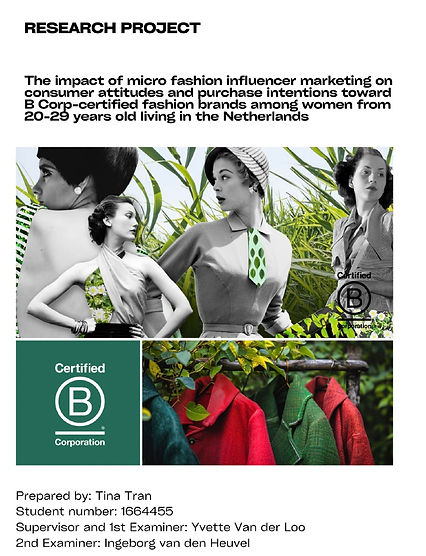
This research project examines how micro-influencers shape consumer attitudes and purchase intentions toward B Corp-certified fashion brands, with a focus on women aged 20–29 living in the Netherlands. As part of my graduation thesis for the Communication program, I applied a qualitative research approach that combined desk research with semi-structured interviews involving ten participants from the target group. The project is grounded in two theoretical frameworks: the Theory of Planned Behavior (TPB) and the Elaboration Likelihood Model (ELM), which together provided insight into how influencer messaging influences decision-making and ethical consumption.
Findings revealed that authenticity, relatability, and storytelling are the most effective influencer traits for driving trust and engagement. However, limited consumer awareness of B Corp certification and price sensitivity remain key barriers to sustainable purchases. Based on these insights, I developed two key deliverables: a Selling Tool (White Paper) and a Sales Pitch Presentation. The White Paper offers a practical guide for B Corp-certified fashion brands, outlining strategies such as long-term influencer partnerships, educational content about B Corp certification, value-driven messaging to address affordability concerns, and the use of engaging visual storytelling formats. The Sales Pitch Presentation highlights the urgency of the challenges faced by sustainable fashion brands and presents the Selling Tool as a strategic solution tailored for real-world application.
Together, this research project and its tools provide B Corp-certified brands with a clear and actionable roadmap to strengthen their micro-influencer marketing approach and connect more effectively with the next generation of conscious consumers.